What Is SEO and Why Every Indian Business Needs It in 2026
India now has more than 900 million active internet users, and Google remains the first stop for almost every buying decision from choosing a nearby restaurant to comparing insurance plans. Yet most small and mid-sized Indian businesses still rely on word-of-mouth, cold calling, or paid ads that stop working the moment the budget runs out.
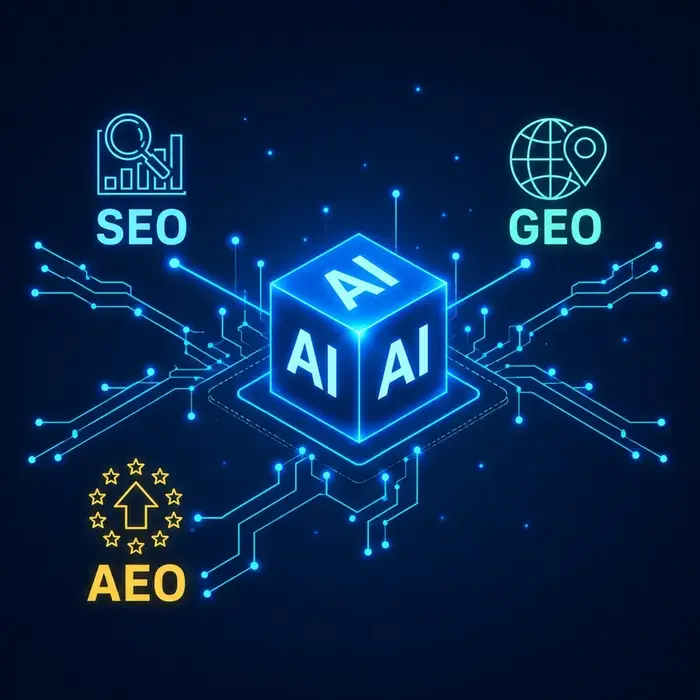
This guide explains exactly what SEO is, why it matters more than ever for Indian businesses in 2026, and how to start capturing free, high-intent traffic from Google.
1. What Is SEO, Exactly?
Search engine optimization is the practice of improving a website so that it appears higher in unpaid (organic) search results for the terms your customers are actually typing into Google. It combines technical fixes, content creation, and reputation-building so that search engines can find, understand, and trust your pages enough to rank them above competitors.
Unlike a billboard or a paid ad, an SEO-optimized page keeps working for months or years after it's published, continuing to attract new visitors without an ongoing per-click cost exactly why SEO consistently delivers the highest return on investment of any digital marketing channel over a 12-month horizon.
💡 Quick Win: If you do nothing else this week, claim and fully complete your Google Business Profile. It's free, takes under 30 minutes, and is often the single highest-leverage SEO action available to a local Indian business.
2. Why SEO Matters for Indian Businesses in 2026
India's digital economy has crossed an inflection point. Smartphone penetration, falling data prices, and growing trust in online reviews mean that even hyperlocal businesses now win or lose customers based on what shows up when someone searches their category plus their city.
| Trend | Why It Matters for SEO |
|---|---|
| 900M+ internet users | Massive, still-growing addressable audience searching in Hindi, English, and regional languages |
| 76% of searches on mobile | Mobile-first indexing and page speed directly decide who ranks |
| "Near me" searches rising sharply | Local SEO and Google Business Profile optimization drive walk-in and call volume |
| Voice assistants growing in Tier 2/3 cities | Conversational, question-based content wins voice and AI Overview placements |
| Rising cost-per-click on paid ads | Organic SEO traffic becomes comparatively cheaper every year |
3. Local SEO: The Fastest Win for Indian SMEs
For any business with a physical location or a defined service area, local SEO usually delivers results faster than any other tactic. It centers on three pillars: a fully optimized Google Business Profile, consistent Name-Address-Phone (NAP) details across directories like Justdial, Sulekha, and IndiaMART, and a steady stream of genuine customer reviews.
How to Strengthen Local SEO Fast
- ✓Add real photos of your storefront, products, and team listings with photos get significantly more clicks
- ✓Respond to every review, positive or negative, within 48 hours
- ✓List accurate business hours, including festival and holiday exceptions
- ✓Create a dedicated landing page for each city or locality you serve
4. Mobile-First and Multilingual SEO
Google indexes the mobile version of your site by default, and in India the overwhelming majority of organic traffic arrives on a phone, often over a mid-range connection. Pages that take more than 3 seconds to load lose a meaningful share of visitors before they ever see your content compressing images, minimizing pop-ups, and using a lightweight theme are baseline requirements to rank at all.
India is also not one search market it's dozens layered on top of each other, with an increasing share of queries typed in Hindi, Tamil, Bengali, and other regional languages. Businesses that only optimize an English homepage are leaving a large, high-intent audience untouched, and voice search adoption is growing fastest in Tier 2 and Tier 3 cities where typing in English is a bigger friction point than speaking a query aloud.
5. On-Page SEO Fundamentals
On-page SEO covers everything you control directly on a page: the title tag, meta description, heading structure, URL, and body content. Getting these fundamentals right ensures Google and the human reading the page immediately understands what the page is about and why it deserves to rank.
| Element | Best Practice for Indian Websites |
|---|---|
| Title Tag | Include city or region name for local businesses, keep under 60 characters |
| Meta Description | Mention price range, delivery area, or key differentiator to improve click-through |
| H1 | One per page, matches what the searcher is actually trying to accomplish |
| URL Structure | Short, in English or transliterated keywords, avoid special characters |
| Image Alt Text | Describe the image naturally; include location for product or storefront photos |
6. Off-Page SEO, Backlinks & Technical Foundations
Backlinks from relevant, trustworthy Indian websites news portals, industry associations, local business directories, and niche blogs remain one of the strongest ranking signals available. A single link from a well-known publication typically outweighs dozens of low-quality directory submissions.
Before investing heavily in content, confirm Google can actually crawl and index your site. Common issues on Indian small-business websites include missing XML sitemaps, blocked robots.txt files left over from development, slow shared hosting, and duplicate content created by WWW versus non-WWW or HTTP versus HTTPS versions of the same page.
💡 Quick Win: Run your homepage through Google's PageSpeed Insights today. If your mobile score is below 50, fixing image compression alone can often move it into the 70s within an afternoon.
7. Content Marketing and Understanding Search Intent
Consistent, genuinely useful content is what gives Google a reason to keep sending you new visitors. Rather than publishing generic articles, the highest-performing Indian business blogs answer the specific questions their customers ask before, during, and after a purchase.
Not every keyword deserves the same type of content. A search for “best CA firm in Pune” is commercial intent and needs a comparison-style page; a search for “GST registration process” is informational and needs a clear step-by-step guide. Matching content format to intent is often the difference between ranking on page one and being buried on page three despite similar effort.
8. SEO vs. Paid Ads: Where Each One Fits
SEO and paid search solve different problems on different timelines. Paid ads can generate leads within hours but stop the moment spend stops; SEO takes longer to build but keeps producing traffic indefinitely. Most growing Indian businesses eventually run both in parallel paid ads for immediate demand capture, SEO as the long-term, compounding asset.
9. AI Overviews and the Future of Search in India
Google's AI Overviews are increasingly appearing above traditional results for informational queries in India, summarizing answers directly on the results page. Ranking well increasingly means being cited as a source inside an AI-generated answer, not just holding a top-10 blue link.
Generative Engine Optimization (GEO) writing clear, definition-style opening sentences, using descriptive headers, and backing claims with specific, checkable facts sits on top of the same foundation of technical health and genuine expertise that has always mattered for traditional SEO.
Your First 90 Days of SEO
Technical audit and Google Business Profile setup
On-page fixes and first content cluster
Link outreach and performance tracking
Key Takeaways
- ✓SEO is the highest-compounding digital marketing channel available to Indian businesses of any size
- ✓Local SEO and Google Business Profile deliver the fastest results for location-based businesses
- ✓Mobile-first, multilingual, and voice-ready content is essential given India’s mobile-majority audience
- ✓Sustainable rankings come from consistency across technical health, content, and authority not isolated tactics
💡 SEO in India in 2026 is no longer optional for any business that wants durable, cost-efficient growth. Start with the fundamentals a fast, mobile-friendly site, a fully optimized Google Business Profile, and content that genuinely answers what your customers are searching for and build outward from there. Treat it as an ongoing discipline rather than a one-time project, and the compounding returns will follow.
Frequently Asked Questions
How long does SEO take to show results in India?+
Local SEO can show measurable movement within 6–10 weeks; competitive national keywords typically take 4–12 months.
Is SEO still worth it with AI Overviews and chatbots growing?+
Yes. AI systems pull heavily from well-optimized, trustworthy web content, making SEO and AI visibility complementary rather than competing.
How much does SEO cost for a small business in India?+
Costs vary widely by competitiveness and scope; local-focused engagements are typically far less expensive than national e-commerce campaigns.
Do I need a blog to rank well on Google?+
Not strictly, but consistent, relevant content significantly expands the number of keywords a site can realistically rank for.
Should my website be multilingual?+
If a meaningful share of your customers search in Hindi or another regional language, well-translated pages can unlock otherwise untapped demand.
What's the fastest SEO win for a local business?+
A fully completed and actively managed Google Business Profile, including regular photos and prompt review responses.